Set the Foundation Before Winter Weather Slows the Site
Foundation excavation in Savannah, Tennessee should be planned before late fall rain, colder temperatures, and shorter workdays begin to slow site work. A properly prepared building site gives you a cleaner start for a new home, addition, barn, shop, garage, or storm shelter project.
At Gravel Express LLC, we provide precision excavation from Savannah for rural, residential, farm, and commercial properties within a 50-mile tri-state radius. Our service area includes Hardin, Wayne, and McNairy counties in Tennessee, Alcorn and Tishomingo counties in Mississippi, plus nearby Northwest Alabama communities.
October is a good time to assess what your property needs before winter weather changes the job. We look at access for trucks and equipment, soil conditions, water flow, and the timing of the next construction phase. That early planning can prevent a site from becoming difficult to reach or work once rain softens the ground.
Foundation excavation is only one part of getting a site ready. We can also coordinate related work that keeps the project moving, including land clearing, aggregate hauling, driveway construction, rough grading, and drainage work.
Fall Excavation Gives Your Project a Better Start
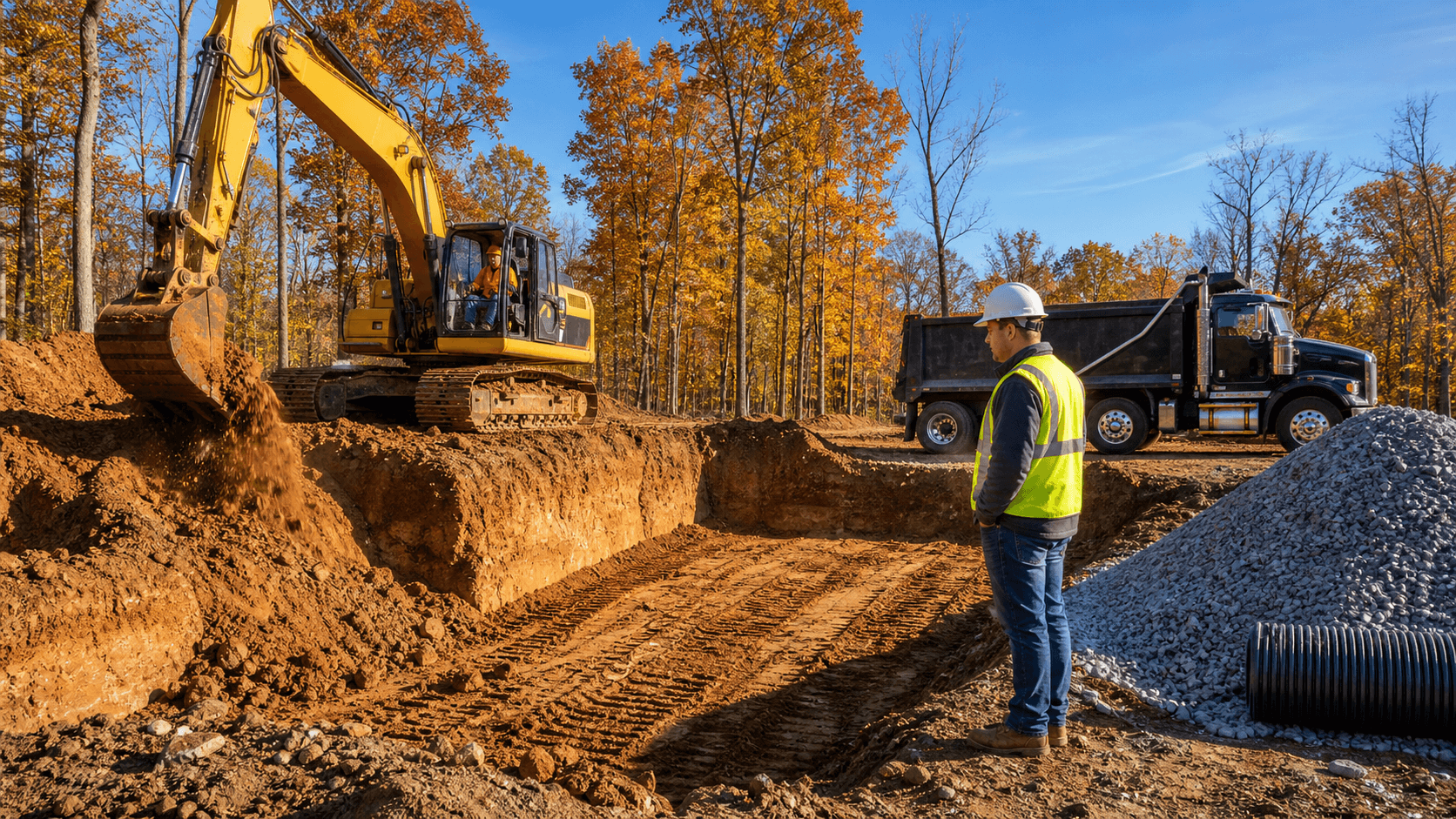
Fall can be a practical working window for foundation excavation contractors in Savannah, TN. Drier stretches can make it easier to establish a stable entry point, remove unsuitable material, shape a building pad, and complete grading before heavier winter rainfall arrives.
Wet ground changes the pace of a rural construction site. Trucks can leave deep ruts on an access road. Equipment may have less room to move safely. Hauling can slow down, and soft soil can make it harder to hold the planned excavation depth and slope.
Before work begins, we consider the conditions that affect the job:
- Whether trucks can enter and leave without damaging the site
- Whether the planned building area holds water after rain
- Whether soil needs to be removed, shaped, or supported with aggregate
- Whether drainage work should be completed before footing or foundation work
Completing excavation during fall may put your project in a better position for footings, foundation work, drainage installation, or utility planning. Still, every property is different. We base the schedule on actual site conditions, engineered plans, the intended structure, and local permit requirements.
Start with a Site That Is Cleared, Accessible, and Staked
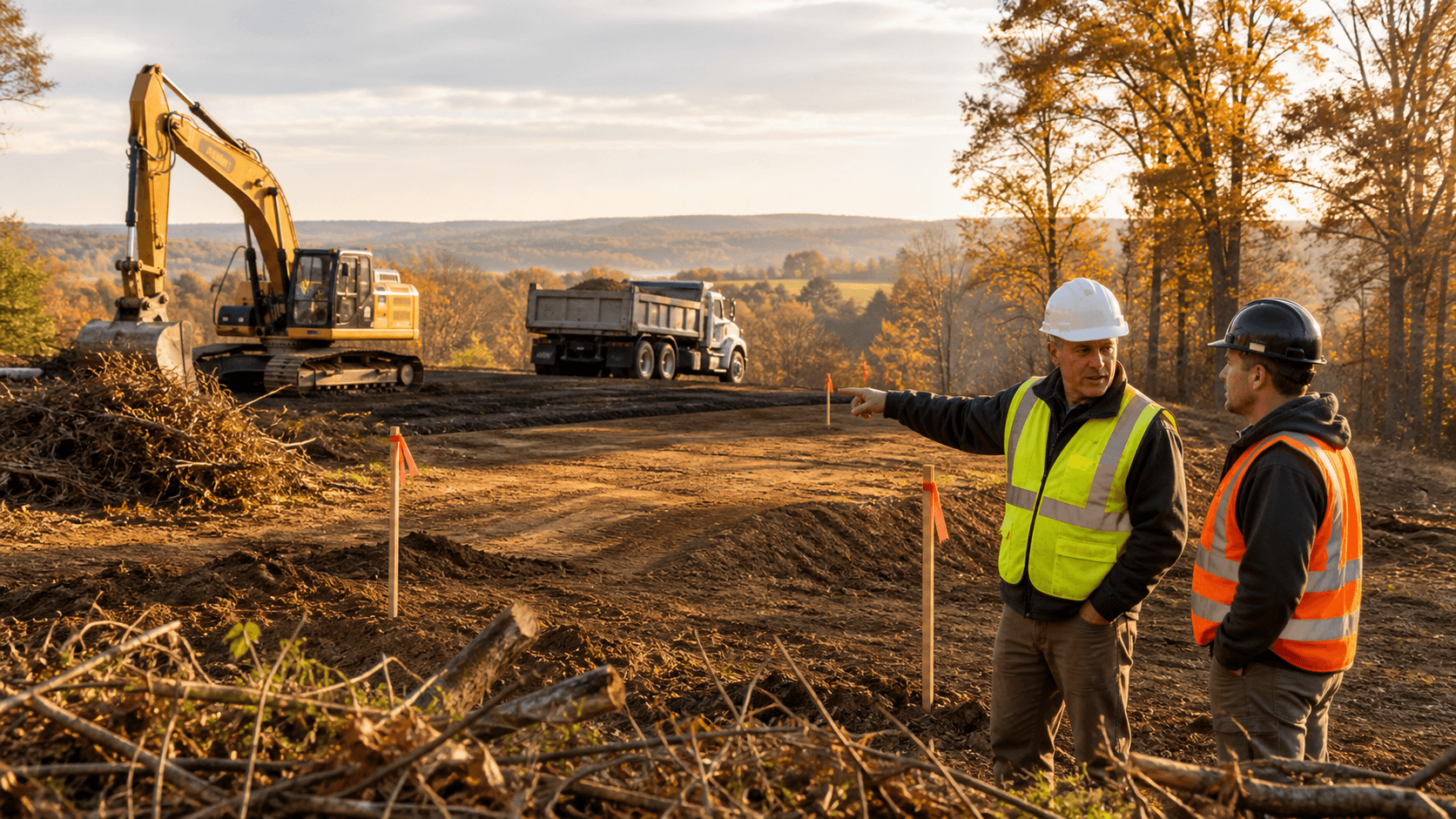
Accurate foundation work starts before the first bucket goes into the ground. The building location needs to be reviewed, boundaries should be confirmed, and the layout should be clearly marked for the builder's or engineer's plans. Equipment and material trucks also need a route that makes sense for the property.
Brush, small trees, and other growth can limit access or hide low spots in the ground. When clearing is needed, we can prepare the area so excavation equipment has room to work and the next construction crew can see the shape of the site.
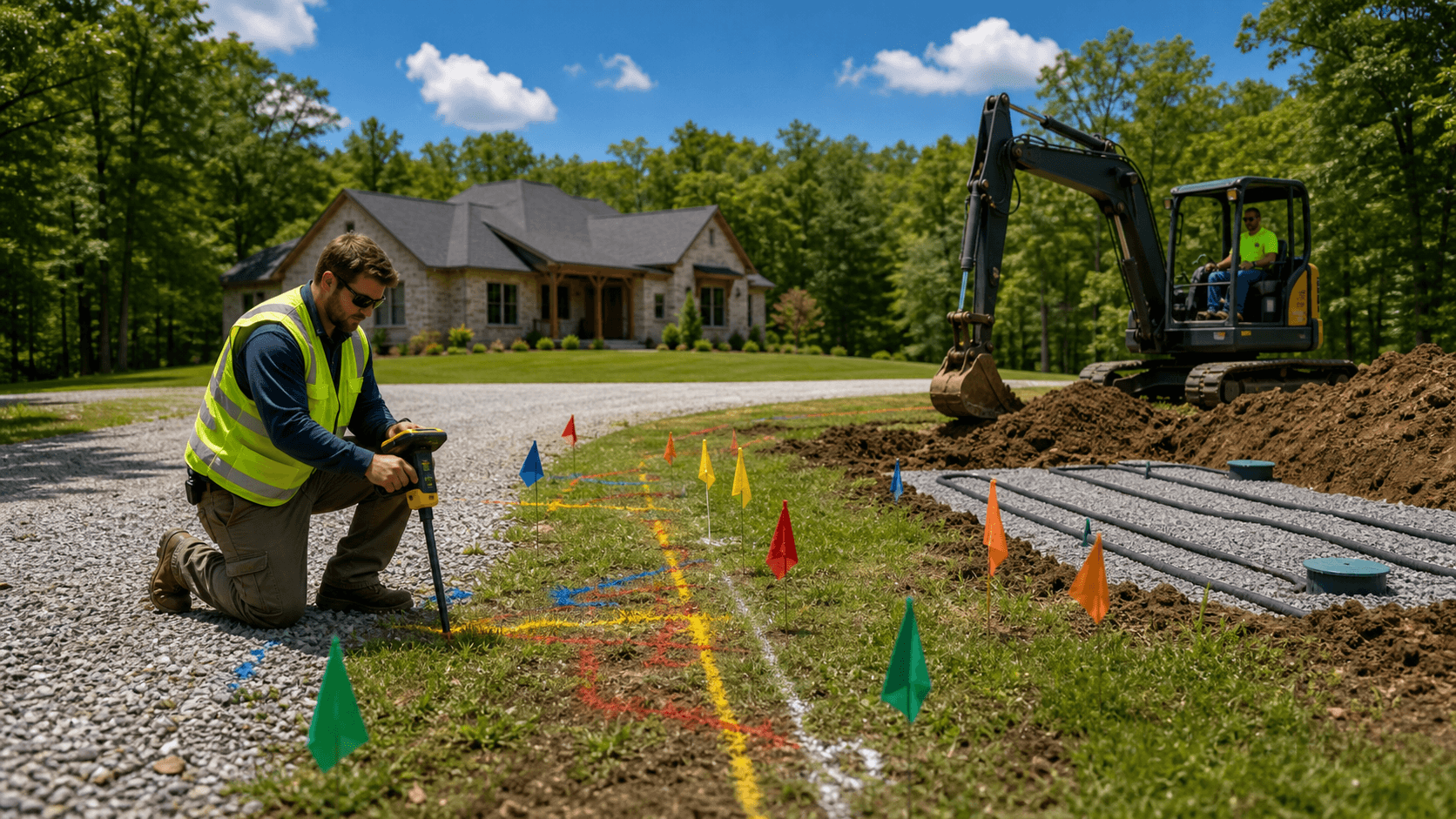
Before any excavation, call 811 to have underground utilities located. That step matters even on a rural property where lines are not easy to spot. We also recommend identifying known septic locations, wells, buried farm utilities, existing drainage lines, and other features that could affect digging.
Site preparation often includes:
- Clearing brush or trees where access is limited
- Establishing a truck route and equipment entrance
- Reviewing the building layout and planned elevation
- Rough grading the work area before excavation
- Hauling aggregate for access, pads, or drainage needs
We coordinate connected site work for new homes, garages, barndominiums, equipment sheds, farm buildings, and storm shelter installations. A clear, accessible, and properly laid-out site helps keep each phase in the right order.
Control Water Before It Reaches the Foundation
Drainage needs to be considered before and during foundation excavation. Water that collects near footings, slabs, crawl spaces, or foundation walls can create problems long after the construction equipment has left the property.
The goal is not simply to dig the right depth. The surrounding ground also needs a plan for moving water away from the structure. That can include shaping the site for proper slope, preparing trench routes, placing drainage stone where the plans call for it, and avoiding low areas that collect runoff.
Around Savannah, rural lots may include rolling ground, clay-heavy soil, open fields, ditches, creek areas, or runoff from a higher section of the property. Those conditions can affect how water moves during a hard rain. We look at the full site rather than treating the foundation area as an isolated hole in the ground.
Good drainage planning may involve several connected tasks:
- Grading the ground to direct runoff away from the structure
- Preparing areas for drainage trenches or lines
- Hauling aggregate for specified drainage material
- Building or improving driveway access that will not trap water
- Addressing low spots before they become muddy work areas
Winter rain can quickly expose weak drainage planning. Handling water flow before foundation work is complete gives the site a better chance of staying usable during the next phase.
Choose Contractors Who Plan the Whole Site
When comparing foundation excavation contractors, ask how they plan to handle the entire property, not just the excavation itself. The answers should cover truck access, soil removal, building pad preparation, drainage needs, aggregate hauling, and the way the work will follow the builder's or engineer's layout.
A foundation site may need clearing before equipment arrives. It may need a stable driveway before concrete trucks can enter. It may need grading and drainage work before construction can continue. Working with one local contractor for connected site work can reduce handoffs between separate crews and keep the work sequence clear.
At Gravel Express, we handle precision excavation, aggregate hauling, land clearing, driveway construction, and drainage work for properties that need more than one step completed. For storm shelter projects, we also install FEMA-rated storm shelters and can prepare the excavation and site access needed for installation.
The excavation scope should match the property, material needs, weather conditions, and the structure you plan to build. Clear planning before equipment arrives helps avoid missed details that are harder to correct once the site is wet or construction is underway.
Plan Foundation Excavation Before Winter
Foundation excavation is easier to manage when access, drainage, clearing, hauling, and grading are addressed before winter weather creates softer ground and scheduling delays. A site review in fall gives you time to identify concerns while there is still room to adjust the construction plan.
The right preparation keeps the foundation area accessible, properly shaped, and ready for the next step. That starts with a clear layout, safe utility locating, realistic drainage planning, and excavation work that follows the needs of the property.
Keep Your Foundation Schedule Moving
Gravel Express provides precision excavation for properties in Savannah, Tennessee. Our foundation excavation contractors can assess site access, grading, and drainage needs before work begins. Contact us for a free estimate, or call 731-607-9558 to discuss your project.