What to Know Before Digging Near Septic Lines and Utility Easements
A storm shelter can only protect your family when it is installed on stable ground with clear access and no buried conflicts. Before a storm shelter installation begins, we need to know what is under the ground, where equipment can travel, and whether the chosen area is restricted by an easement.
In Savannah, TN, rural properties may have private water lines, septic systems, old service lines, and access agreements that are not obvious from the surface. A missed line can stop the project, cause damage, and leave you with a shelter location that creates problems later. Good planning starts before any excavation equipment arrives.
Map Every Line Before Excavation Begins
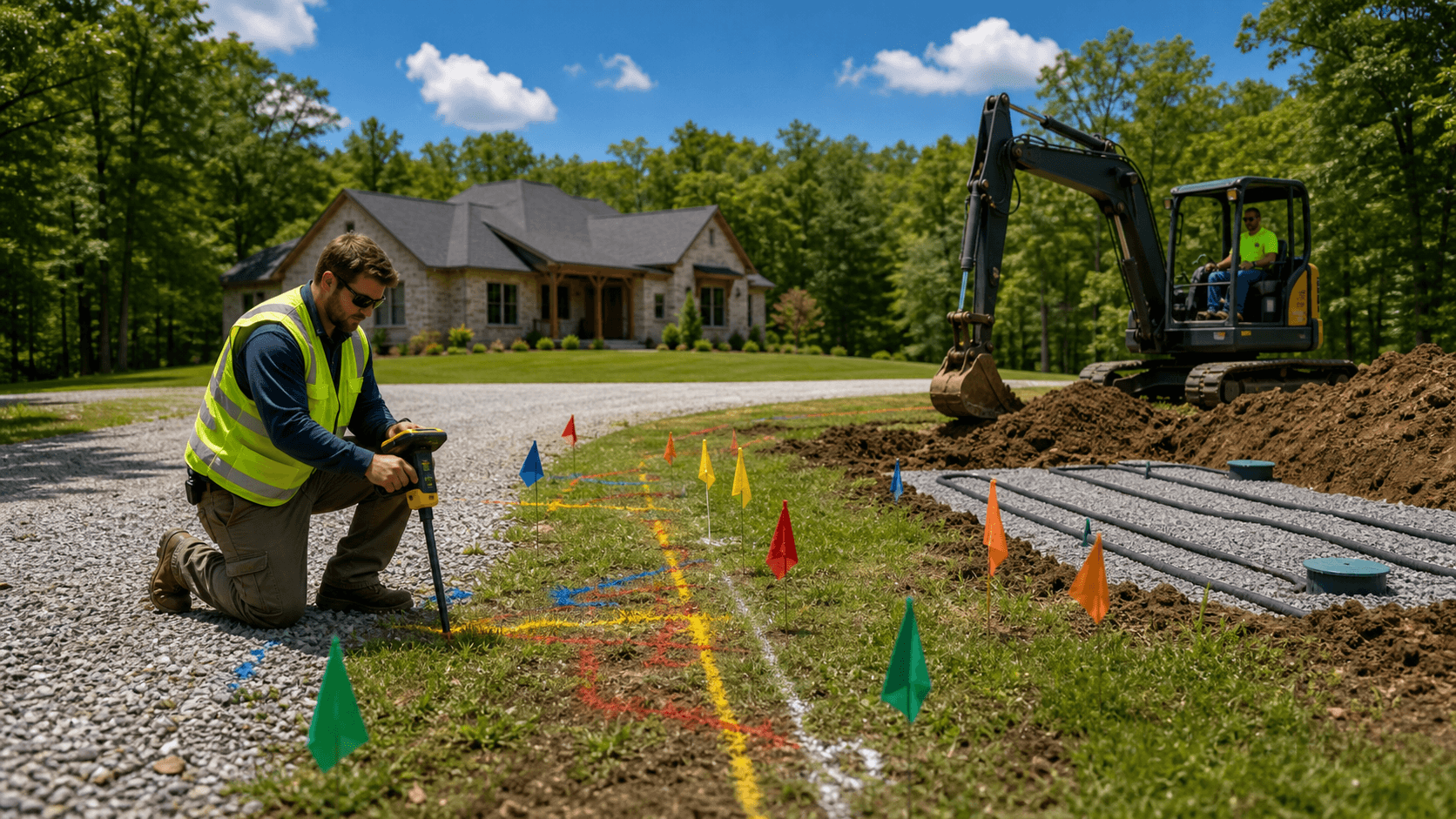
The first step is calling 811 before excavation starts. Tennessee 811 can arrange marking for many public utility lines. If your property is across the state line, the proper utility locating service in Mississippi or Alabama should be contacted as well. Give the locating process enough time, especially during busy fall construction periods.
Utility markings are important, but they do not show every underground line on a rural property. Many private lines are the property owner's responsibility to identify. We often see private lines serving homes, barns, shops, and outbuildings that are not included in standard utility markings.
Private lines may include:
- Water lines running from the meter to the house
- Electrical service to a barn, shop, gate, or pump
- Propane lines, irrigation lines, and invisible pet fencing
- Septic piping and drain field lines
- Older abandoned lines left from previous structures
Protect paint marks and flags once they are placed. Rain, mowing, traffic, leaf cover, and gravel deliveries can make markings hard to see. We recommend taking photos of the marked area and keeping vehicles and equipment away until the excavation plan is set. Our precision excavation work is planned around known site conditions to limit unnecessary disturbance.
Know What an Easement Allows Before You Choose a Site
An easement is a legal right that allows another party to use a defined part of your property for a stated reason. A utility company may have an easement to access power, water, communications, or sewer service. A neighbor may have an access easement. Some easements also involve drainage paths or shared infrastructure.
The area may look like open ground, but that does not mean it is a good place for a permanent storm shelter. A utility provider may need to bring equipment into the easement later for repairs or service upgrades. If a shelter is too close to that area, future work could be difficult for everyone involved.
Before choosing a shelter location, review:
- Your deed and recorded plat
- A current property survey
- County records that show utility or access agreements
- Any known shared drive, drainage, or service routes
Older rural parcels can have easements that are not marked by fences, driveways, or visible utility boxes. If the documents are unclear, we recommend having a surveyor or attorney confirm the easement boundaries and restrictions before work begins. That step can prevent placing a FEMA-rated shelter where future access rights may conflict with it.
Keep Shelter Work Clear of Septic Components
A septic system is more than the tank in the ground. It may include inlet and outlet lines, cleanouts, pump tanks, distribution boxes, lateral lines, and a drain field. Any of these parts can be damaged by excavation, concrete work, delivery trucks, spoil piles, or repeated heavy equipment traffic.
Drain fields need extra care because they depend on undisturbed soil to handle wastewater properly. Compacted soil may not drain as intended. A damaged field can lead to a difficult repair process and may require involvement from the local health department.
For a safe storm shelter installation, we need a clear picture of where the septic system is located. A visual check is not enough. Grass, leaves, and wet ground can hide cleanouts, tank lids, and field lines, especially after late-summer growth and early fall rain.
Start with the septic permit or as-built drawing if you have one. When records are missing or incomplete, a septic professional may need to identify the tank and field before a site is selected. We also account for the route that equipment will take. Even when the shelter itself is away from the septic system, a truck or excavator crossing the wrong area can still create a problem.
Plan the Dig for Safe Fall Storm Shelter Installation
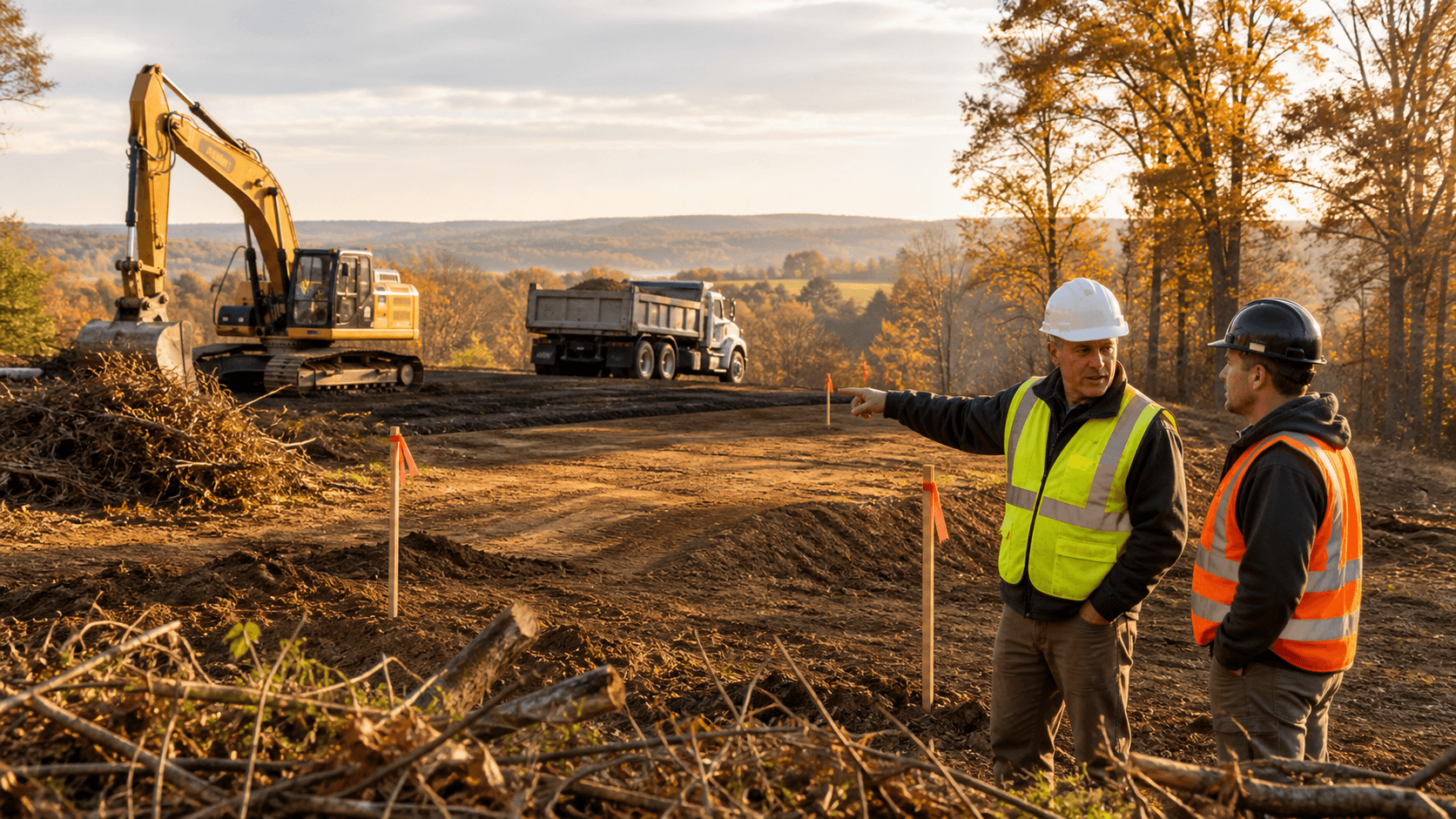
Fall is a practical time to prepare for severe weather, but changing ground conditions can make site planning harder. Wet soil can limit equipment access. Fallen leaves can cover utility markings and septic features. Seasonal schedules can also fill quickly, so early site review helps keep the work organized.
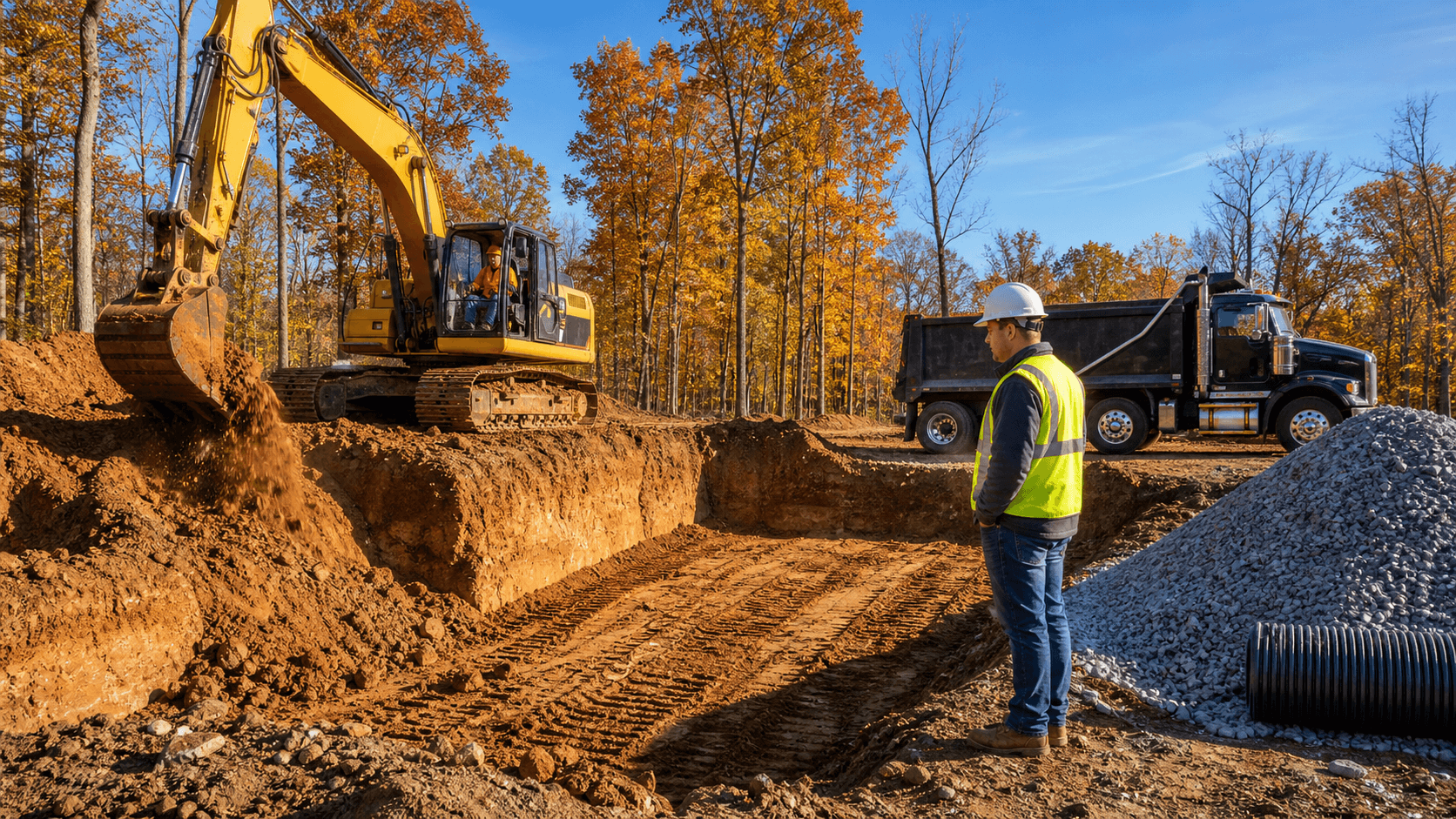
A proper plan looks beyond the hole for the shelter. We assess how the shelter will be reached from the home during an emergency and how equipment can enter and leave the property without damaging the driveway, drainage routes, or buried systems.
A shelter site plan should account for:
- Safe access from the home
- Driveway and equipment access
- Slope, grade, and drainage flow
- Septic locations and utility markings
- Easement boundaries and spoil placement
The right location should work during bad weather, not just on a clear day. It should be easy to reach, outside known underground conflicts, and set up so water does not collect around it. We coordinate excavation, drainage, access, and grade before installing FEMA-rated shelters for rural homes, farms, and new builds throughout the 50-mile tri-state area.
Request a Site Review Before You Dig
Do not guess about septic lines, utility routes, or easement boundaries. A storm shelter is a long-term safety investment, and moving one after installation is far more difficult than selecting the right location from the start. Confirm public and private lines, review available property records, and plan equipment access before the dig date.
A careful site review helps prevent damaged utilities, disrupted septic systems, drainage trouble, and avoidable delays. The best shelter location is one that remains accessible, stable, and clear of underground conflicts for years to come.
Plan A Safe, Ready Shelter Site
Gravel Express provides precision excavation and storm shelter installation with careful attention to existing site conditions. Our team can help position a FEMA-rated shelter for practical access and long-term use. Contact us to request a free estimate, or call 731-607-9558.