Driveway construction in Savannah, Tennessee starts with the ground below the gravel. A load of stone spread over soft ground may look fine at first, but ruts, potholes, washouts, and standing water often show up soon after. The base, grade, and drainage plan do the real work.
At Gravel Express LLC, we are Licensed & Insured and serve Savannah, Tennessee, along with properties across the surrounding tri-state area. Whether you need access to a home, barn, shop, or hunting property, we plan the work around your ground conditions and how the driveway will be used.
Your Driveway Starts with the Ground Below
Rural properties do not all require the same construction approach. Clay soils, rolling terrain, old drainage paths, farm traffic, delivery trucks, and daily vehicle use can all affect the job. A level home site may need a simple plan, while a steep access road or long farm driveway may need more excavation and drainage control.
A proper build generally includes:
- Site evaluation and route planning
- Clearing, excavation, and subgrade preparation
- Drainage features that move water away
- Compacted aggregate layers and final grading
We look at the property first because the right approach depends on what is already there.
Site Evaluation Sets the Driveway Grade
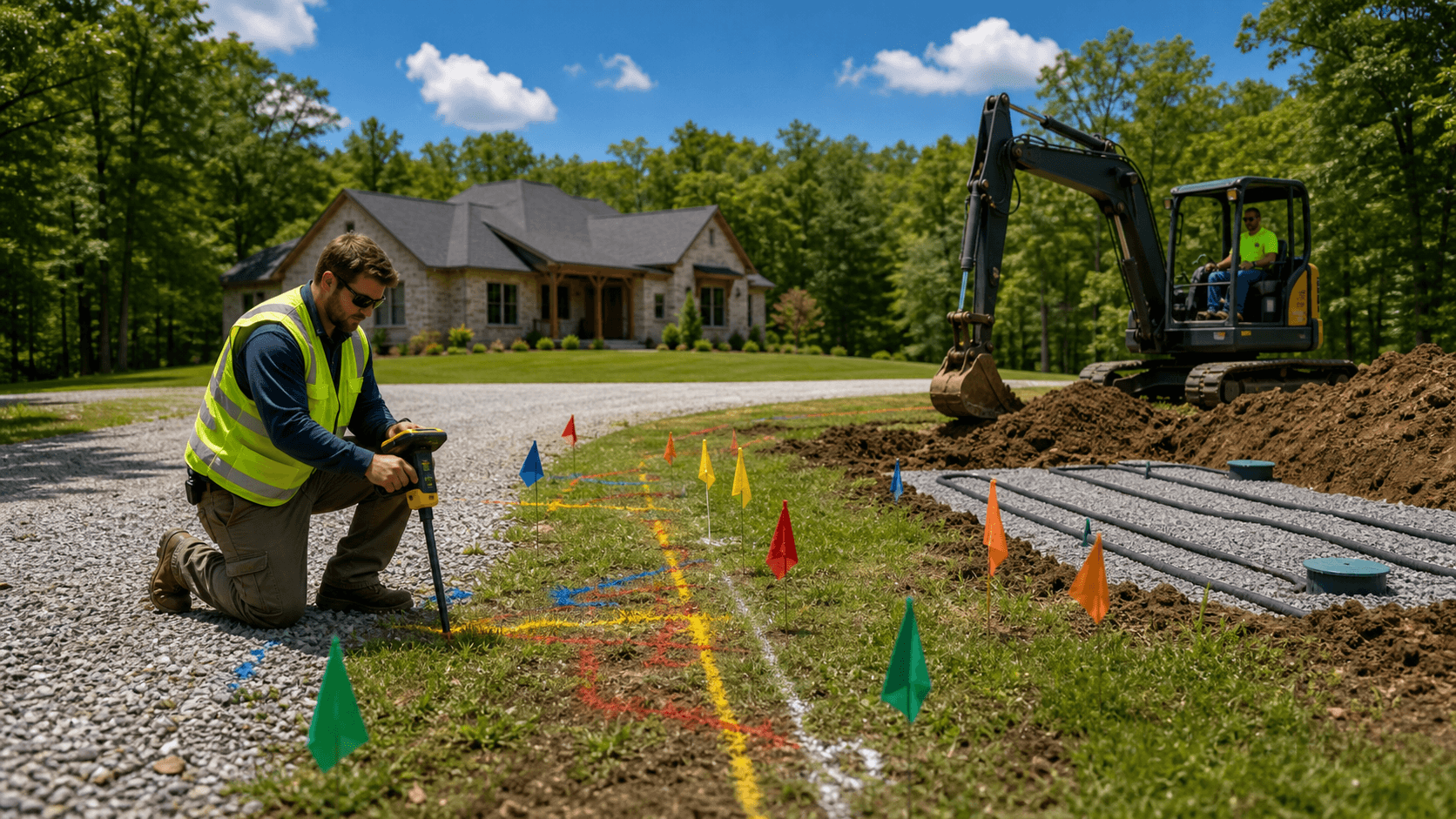
Before equipment or aggregate arrives, we evaluate the proposed driveway route. That means checking slopes, low areas, ditches, water flow, trees, brush, access points, and places where the ground may be soft.
Water needs a path away from the driving surface. A driveway that is too flat can hold water in the wheel tracks. One that is too steep or shaped poorly can send runoff straight down the center, carrying stone with it.
Property owners looking for driveway contractors in Savannah, TN should ask how the contractor will evaluate the grade and drainage before quoting the work. The plan should also account for driveway width, gate access, culvert locations, turnarounds, and room for dump trucks, trailers, emergency vehicles, or farm equipment when needed.
Excavation Builds a Stable Base
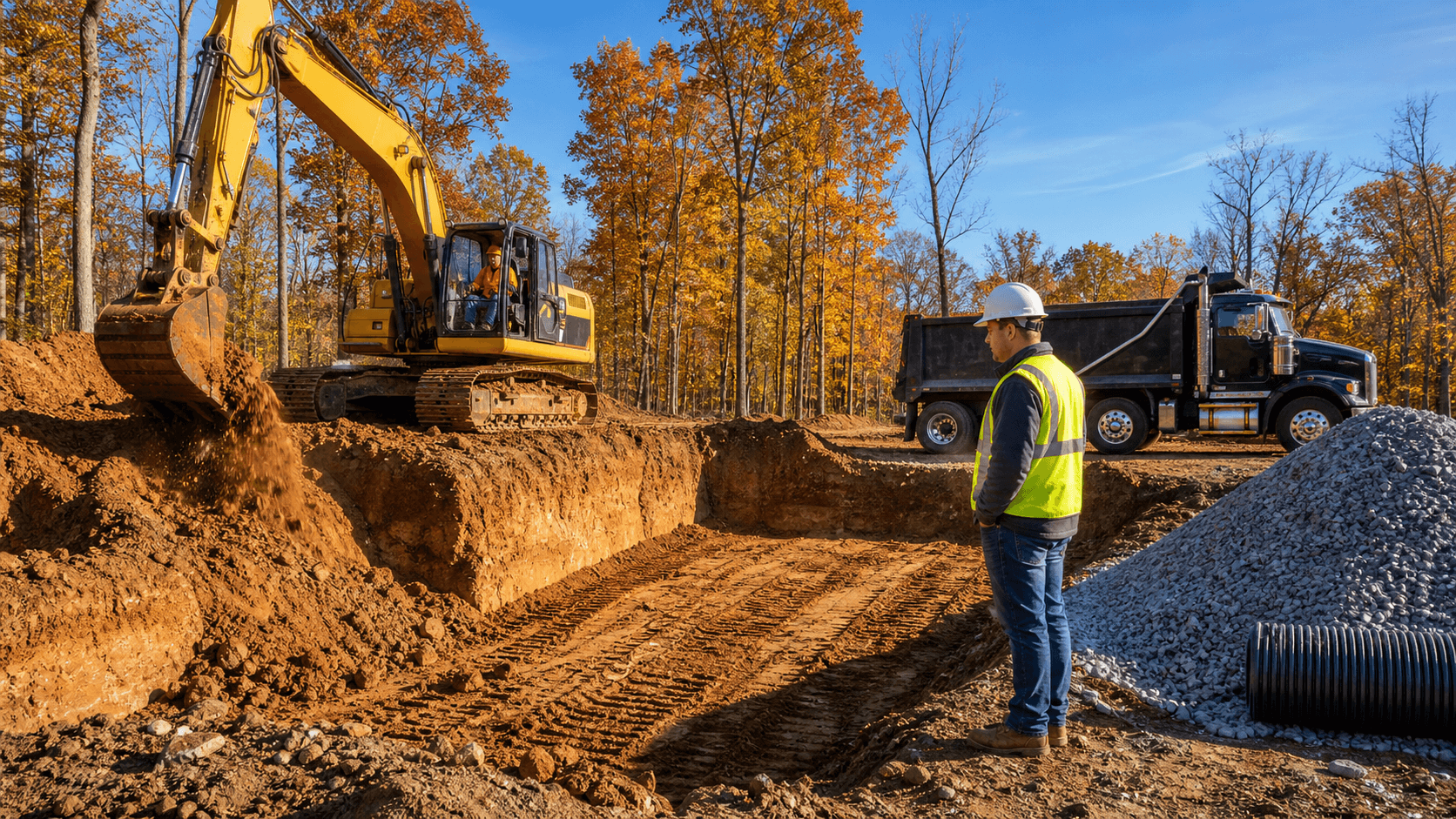
Good driveway construction often begins with removing what should not stay under the drive. Topsoil, roots, organic material, loose fill, and soft spots can shift under traffic. When aggregate is placed over unstable ground, it can sink and rut instead of forming a firm surface.
With precision excavation, we shape the driveway area for the needed width, crown, grade, and drainage path. Soft sections may need more material removed before a suitable base can be built.
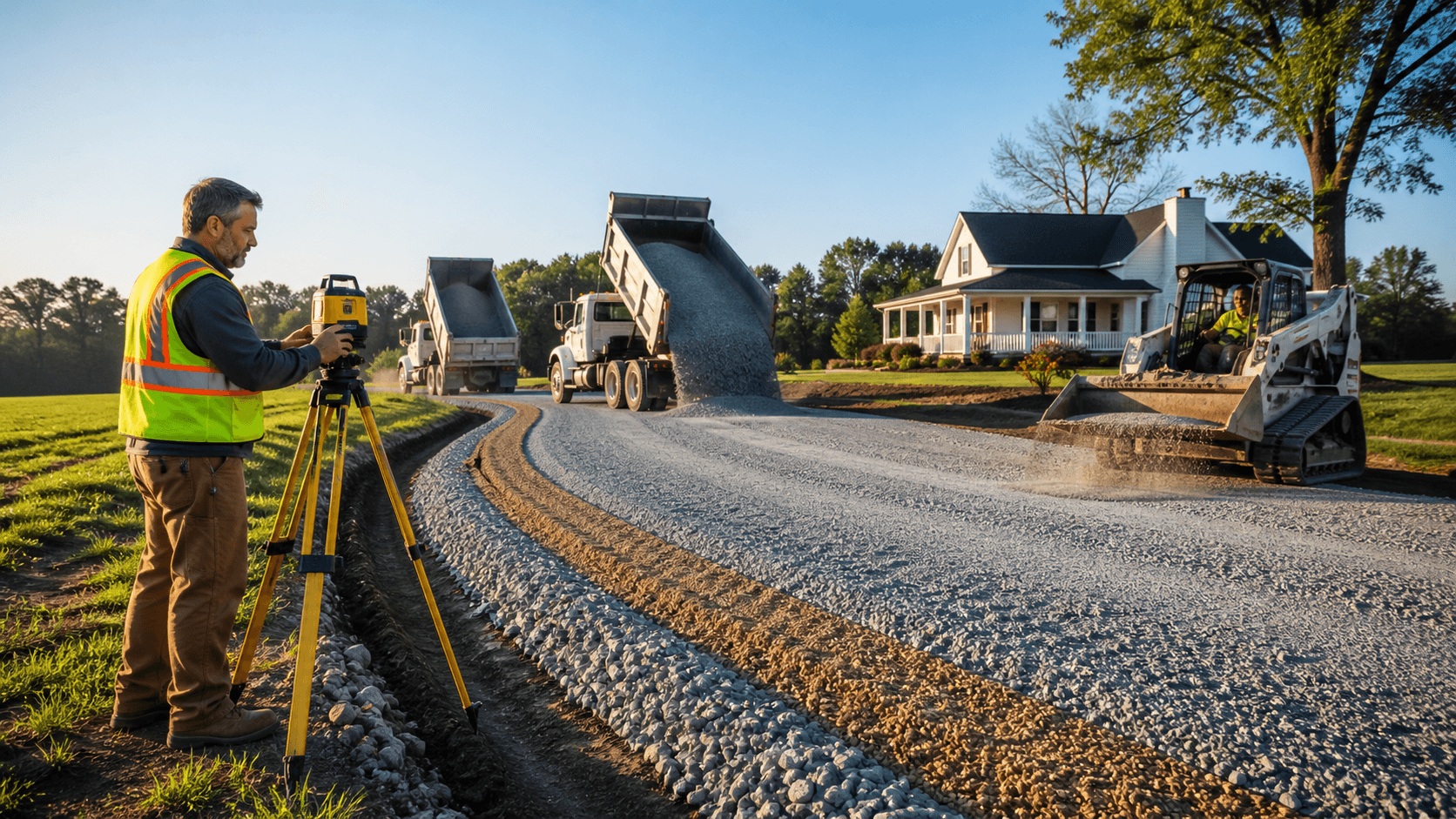
Aggregate should be placed and compacted in layers, not dumped in one thick lift. That process helps create a stable base for regular use by:
- Passenger vehicles and pickups
- Trailers and delivery trucks
- Tractors and farm equipment
- Vehicles traveling to a home, barn, or shop
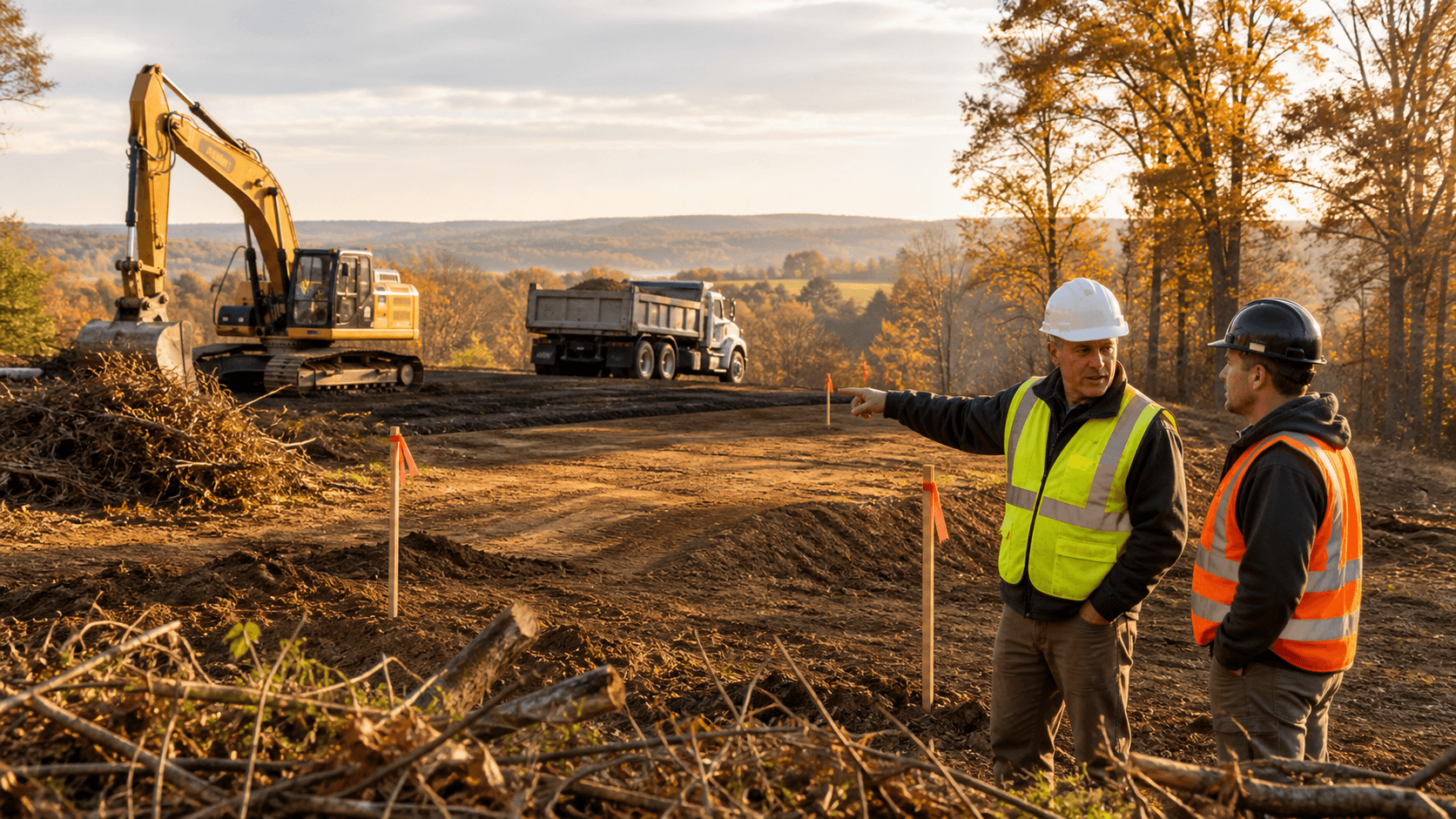
When trees, brush, stumps, or uneven ground are in the way, we can handle land clearing and excavation as part of the driveway project. That keeps site preparation and driveway construction under one coordinated job plan.
Drainage Keeps Water Off the Driveway
Water is one of the main reasons gravel driveways fail. It softens the base, moves stone out of place, creates potholes, and cuts ruts into sloped sections. Adding more gravel without correcting the water path may only cover the problem for a short time.
Depending on the property, drainage work may include a crowned driveway surface, roadside ditches, swales, culverts, outlet paths, and shaped slopes. The right choice depends on where water enters the property and where it can safely exit.
A culvert should not be guessed at or undersized. If a driveway crosses a ditch or drainage path, the culvert needs proper placement and enough capacity to keep water moving without washing out the drive. Experienced driveway contractors in Savannah, TN should plan drainage as part of the build, not as an add-on after the driveway starts failing.
Because we perform drainage work, excavation, aggregate hauling, and driveway construction, we can coordinate those parts of the job from the start.
Aggregate Layers Support Daily Traffic
Not all gravel does the same job. A durable driveway often needs different aggregate materials for the base and top surface. Larger crushed stone can provide structural support below, while a smaller top layer can create a tighter driving surface and help lock the stone together.
Depth matters just as much as material choice. Thin aggregate over soft ground can mix into the soil and fail early. We match the base to the soil conditions, driveway length, grade, and expected traffic rather than relying on a cosmetic layer of gravel.
A driveway used only by passenger vehicles has different demands than one carrying dump trucks, concrete trucks, trailers, tractors, or farm equipment. Knowing how you will use the driveway helps us select materials and build a base that fits the work. We haul aggregate and install it on the same project schedule, keeping the material plan connected to the construction plan.
Plan the Driveway Before Adding Gravel
A driveway built to last needs a site plan, stable excavation, compacted aggregate layers, proper grade, and drainage that directs water away from the driving surface. Those pieces work together. If one is missing, the rest of the driveway can suffer.
It is usually easier to prevent soft spots, washouts, and ruts during construction than to repair them after the base has failed. Before adding gravel to an existing drive, the ground, grade, and water flow should be evaluated first.
Check For:
- Standing water, soft wheel tracks, or ruts after rain
- Gravel pushed to the sides or washed down sloped sections
- Low spots that hold water near the driveway or structures
- Ditches, culverts, and outlet paths that are blocked or undersized
- Areas where the driveway base has mixed into the soil
Build A Driveway That Holds Up
Gravel Express provides precision excavation, grading, and base preparation for property owners who need dependable driveway contractors in Savannah, TN. We assess the site, establish proper slope, and build a stable surface suited to traffic and weather. For a free estimate, contact us or call 731-607-9558.