How Clay Soil and High Water Tables Affect Backyard Shelter Plans
An in-ground storm shelter installation starts with the soil, not the shelter model. Around Savannah, Tennessee, we often evaluate heavy clay, shallow groundwater, uneven grades, and the way rainwater moves across a property before any excavation begins. An open spot behind the house may look convenient, but conditions below grade can change the plan.
Each site needs its own review. Rural properties in Hardin County, Wayne County, McNairy County, and nearby parts of Northeast Mississippi and Northwest Alabama can have very different drainage and excavation concerns, even when they are only a few miles apart. We provide precision excavation and in-ground shelter installation planned around FEMA shelter guidance across our 50-mile tri-state service area, with the goal of creating a stable, accessible shelter location based on real ground conditions.
Clay Soil Can Shift, Hold Water, and Add Pressure
Clay-heavy soil can create challenges before, during, and after a shelter installation. It absorbs water slowly, so a yard may remain wet well after a hard rain. When clay gets wet, it can expand. When it dries out, it can shrink and crack. That cycle can affect excavation walls, backfill material, and the ground around a shelter entrance.
In Savannah, Pickwick, Crump, Adamsville, and rural Hardin County, we see yards where clay holds runoff in low areas. That water does not simply disappear because the rain has stopped. A shelter location must account for what the soil does through wet and dry periods.
Heavy clay can also place added side pressure around an in-ground structure. That is why proper excavation size, prepared support, stable backfill, and controlled grading matter. A rushed installation can leave soil that settles around the entry area or directs water toward the shelter.
When we review a site for storm shelters Tennessee property owners can depend on, we look beyond the first open space. The ground needs to support the installation over time, not just look dry on the day excavation begins.
High Water Tables Can Limit Shelter Locations
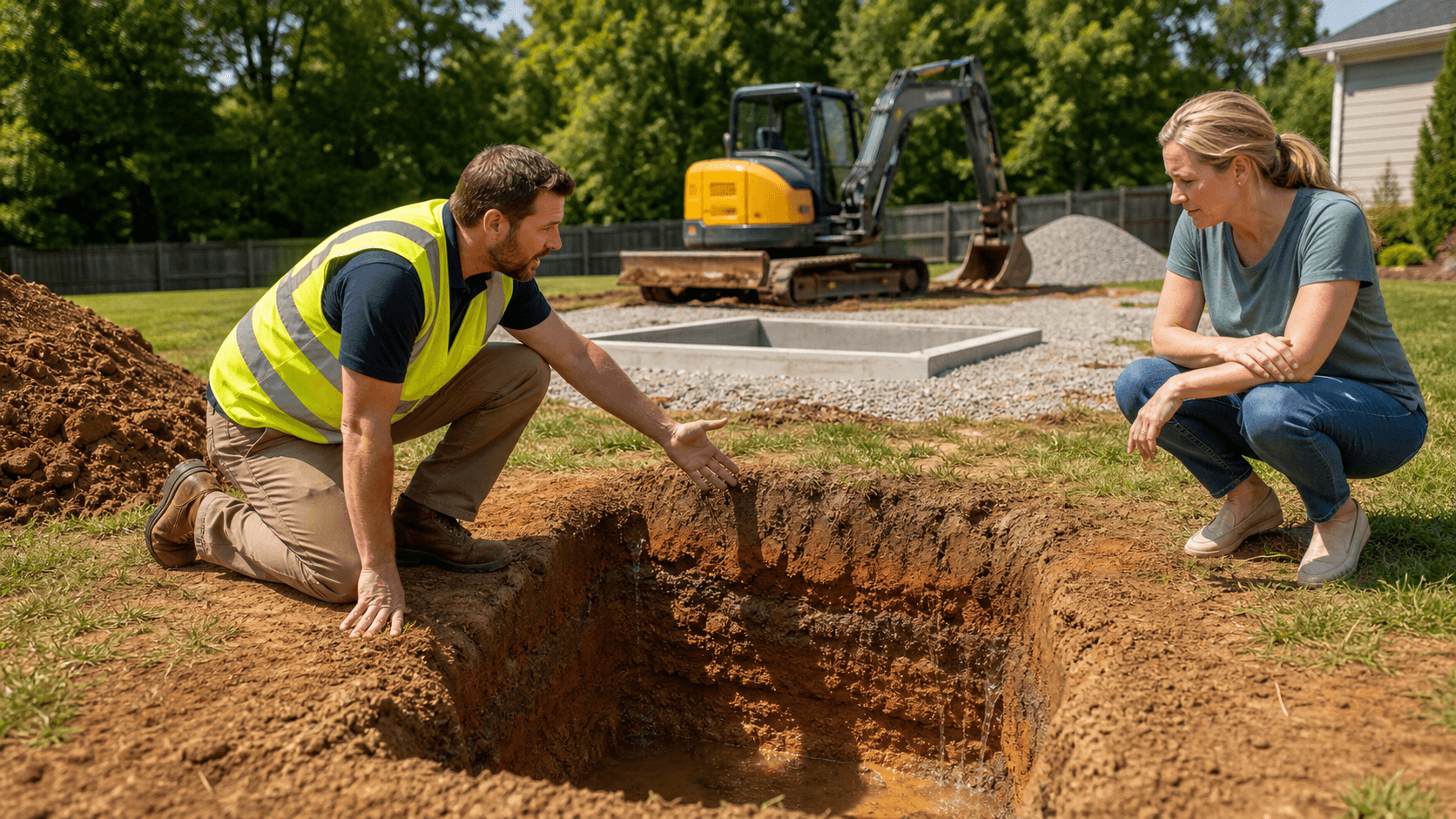
A high water table means groundwater sits close to the surface. During excavation, that water can seep into an open hole or build pressure beneath and around an underground structure. Groundwater levels can change with rainfall, nearby drainage patterns, and the season.
Some warning signs are easy to spot around a property:
- Standing water that remains after rain
- Wet ground that does not dry out in a normal amount of time
- Seepage or springs along a slope
- Soft ground near a pond, creek, or drainage ditch
- Water collecting in low sections of the yard
Properties near the Tennessee River, Pickwick Lake, Counce, and other low-lying areas around Savannah may need closer review. A preferred location may be too close to a drainage path, pond edge, creek bottom, or septic area. Moving the shelter to higher, firmer ground can provide a better long-term result.
Groundwater can affect excavation timing, shelter depth, drainage needs, and final placement. We assess the conditions at the site so the shelter plan matches the property instead of forcing the property to fit a standard layout.
Drainage Planning Protects the Shelter Entrance
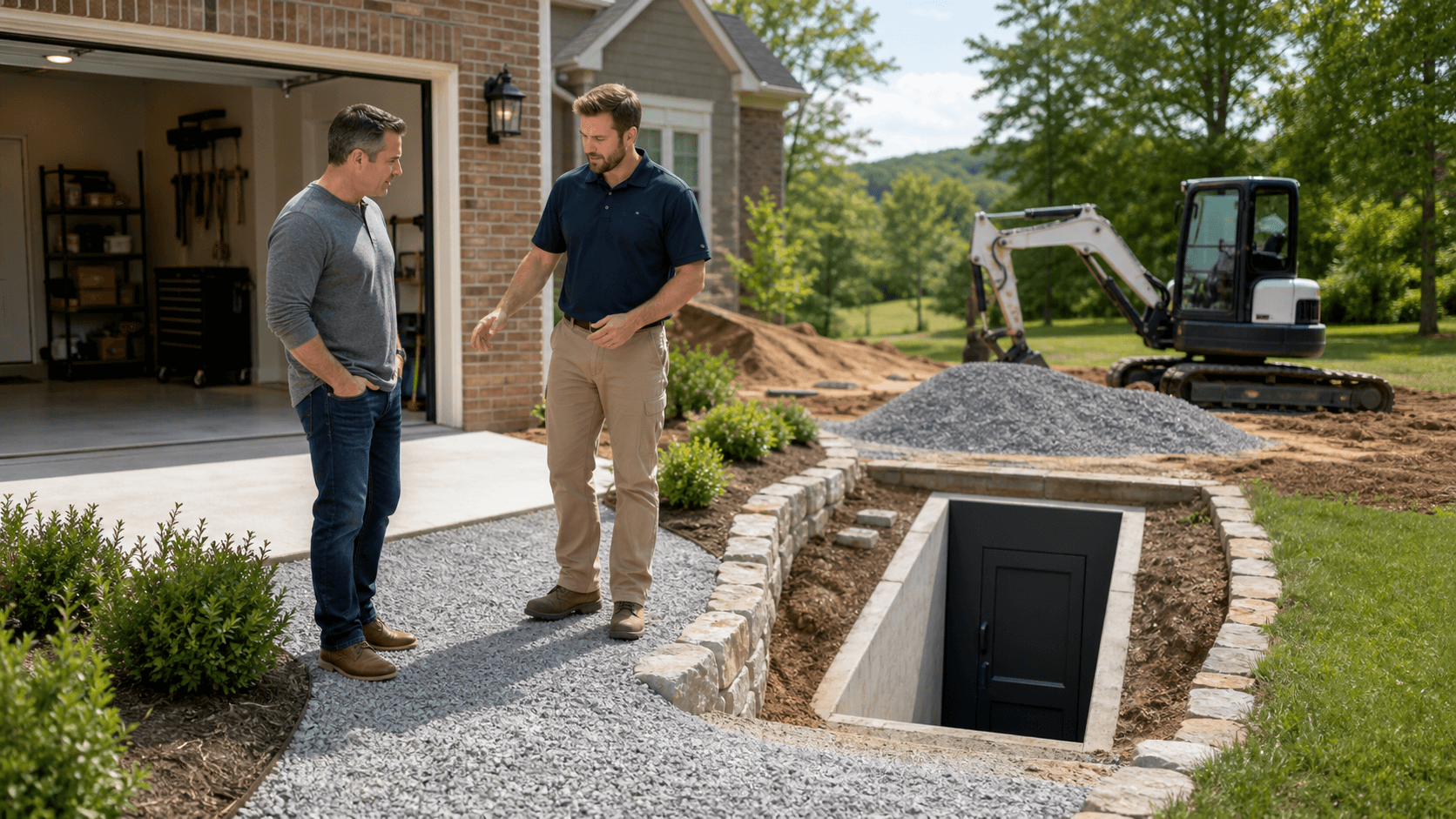
The shelter is only one part of the installation. Surface water also needs a clear path away from the door, stairwell, hatch, and excavation area. An entrance placed in a runoff path can collect water during the same severe weather event that sends your family toward the shelter.
Drainage planning may include several practical measures:
- Grading soil away from the entrance
- Shaping swales to guide runoff around the shelter area
- Extending downspouts away from the excavation
- Keeping the shelter above known low spots
- Managing water from driveways, barns, and outbuildings
Access matters just as much as drainage. You should not have to cross a muddy low area, flooded ditch, or slick slope to reach the shelter quickly. That is especially important for children, older adults, and farm workers moving across the property during severe weather.
Early fall rain can reveal a great deal about a backyard or farm site. Late-summer storms and fall showers show where runoff gathers, where ruts form, and which areas stay soft. We recommend paying attention to those patterns before settling on a shelter location.
Excavation Must Match the Property, Not a Template
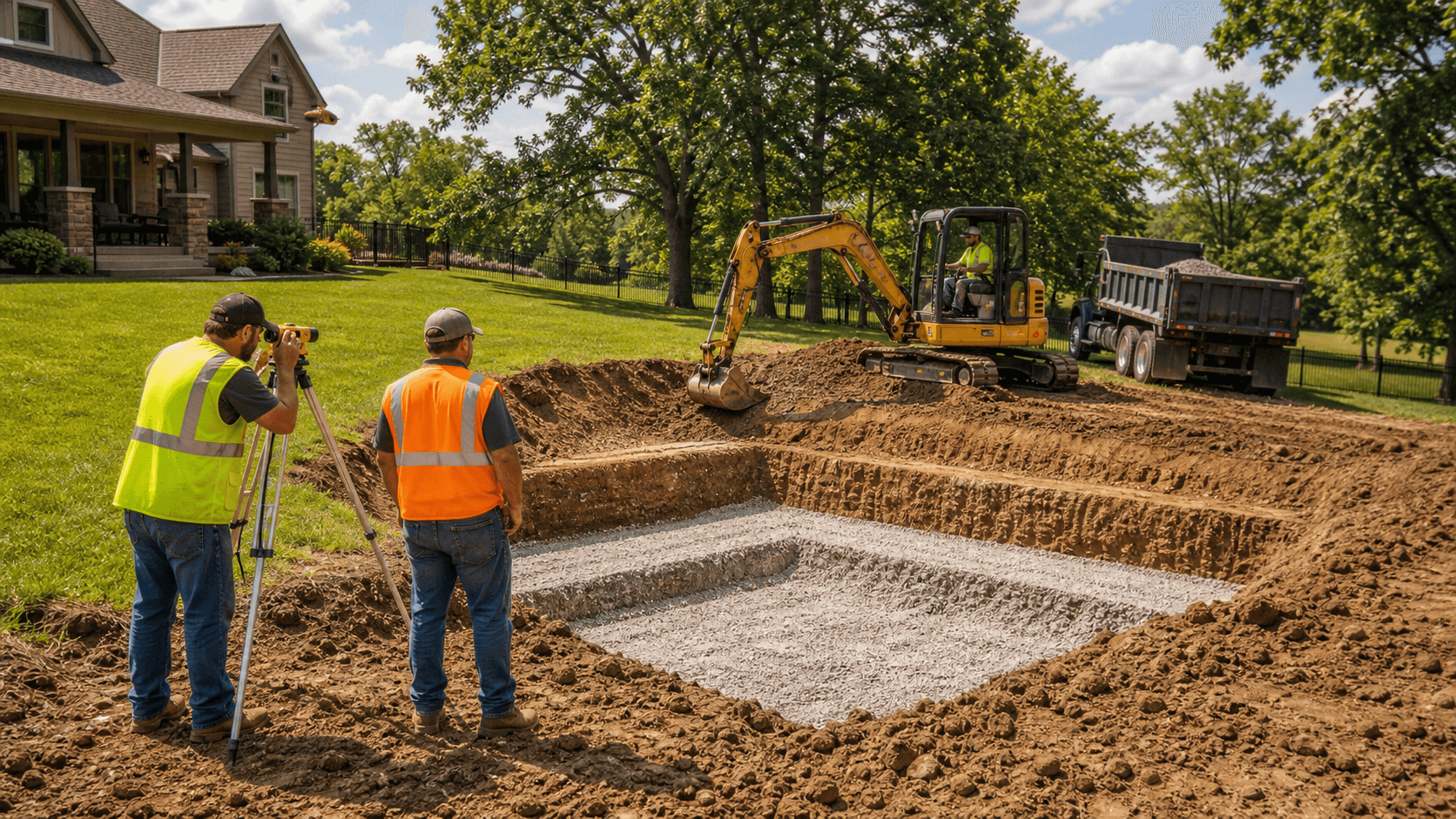
No two backyards, farms, or new home sites are the same. Soil type, slope, water conditions, utility locations, vehicle access, and distance from the home all affect the excavation plan. We review these details before equipment arrives, because access problems can affect the entire installation.
Equipment and hauling trucks need a practical route to the work area. That route should be planned around your driveway, septic field, fence line, pasture, landscaping, and other features that need protection. A tight backyard or sloped farm site may require a different approach than an open building lot.
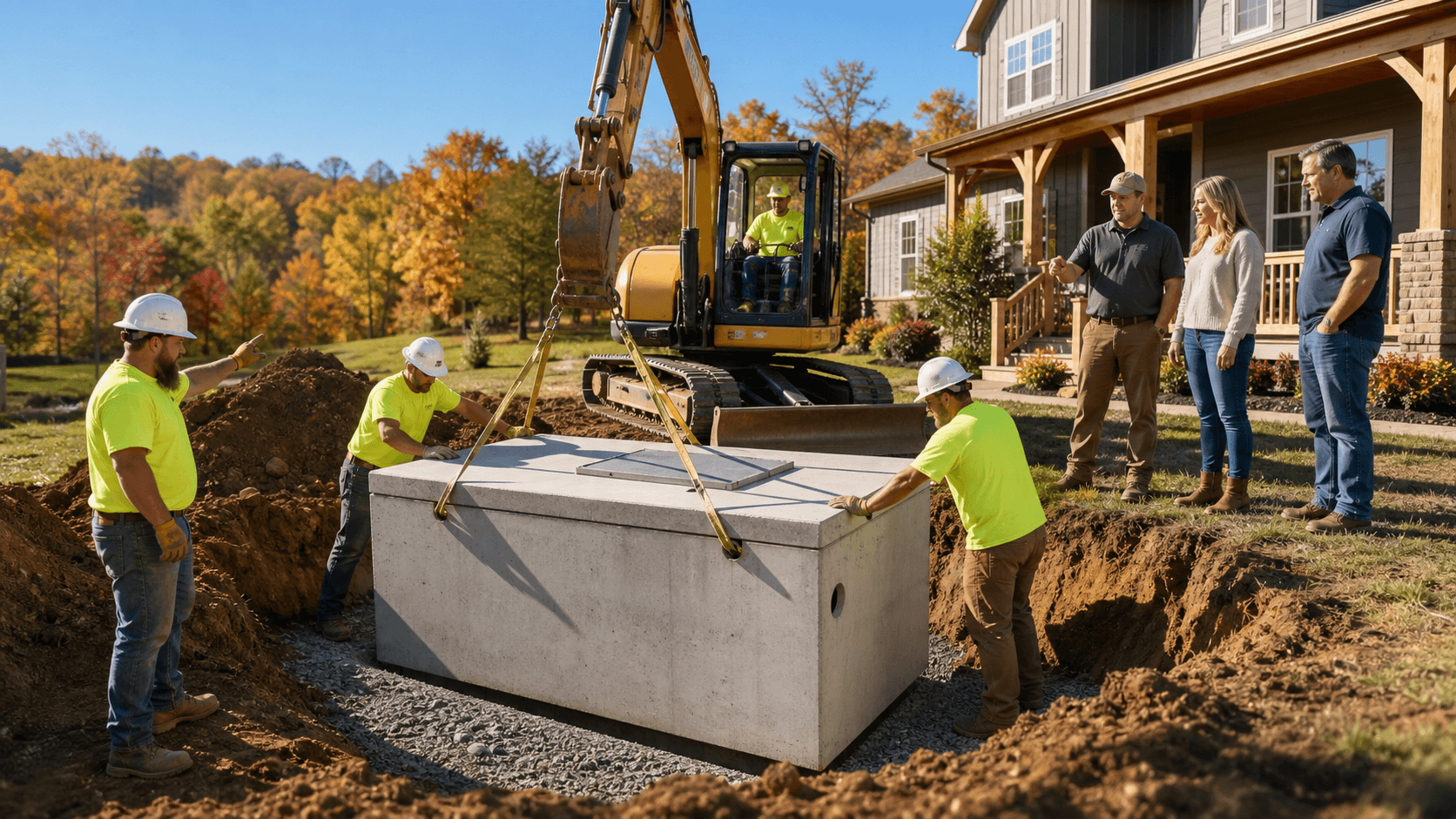
Proper excavation and backfilling support an in-ground storm shelter installation planned around FEMA shelter guidance. The shelter needs to sit level on a prepared base and be surrounded with properly placed material. Shortcuts can lead to settling, drainage trouble, or difficult entry access later.
We install storm shelters Tennessee property owners rely on from Savannah, TN, and throughout nearby communities including Clifton, Waynesboro, Selmer, Corinth, Iuka, Florence, and Muscle Shoals. The work begins with a plan that fits the ground, equipment access, and daily use of the property.
Review the Site Before Wet Weather Returns
Clay soil and high groundwater do not automatically prevent an in-ground shelter installation. They do mean the site needs the right placement, excavation approach, backfill, and drainage plan. A professional review can identify low spots, runoff paths, access concerns, and soil conditions before they become problems during installation.
The best shelter location is not always the closest open patch of grass. It is the location that stays accessible, drains properly, and gives the shelter stable support through changing weather conditions.
Get a Shelter Site Built for Reliable Access
Gravel Express provides precision excavation and installation for storm shelters in Tennessee, with site conditions reviewed before work begins. Our team can assess drainage, access, and support needs for your property. Contact us for a free estimate, or call 731-607-9558.
Call 731-607-9558 for a free estimate.