How to Plan Faster Shelter Access From Your Home and Garage
Storm shelter access planning for Savannah, TN properties starts with location. A storm shelter only helps if every person in your household can reach it quickly when a warning is issued. The best spot is not always the farthest point from the house or the easiest place to excavate. We look at safety, walking distance, ground conditions, drainage, and the clear path to the entrance.
Start by asking a simple question: How many steps does it take to reach the shelter from the places your family uses most? Consider the primary bedroom, living room, kitchen, children's rooms, bathrooms, and attached garage. For young children, older adults, and anyone with mobility concerns, the route can matter just as much as the shelter itself.
Measure the Actual Route Before Choosing a Location
A site plan can make a shelter look close when the real walk is not. Before choosing a location, walk the route from your main living areas and garage. Time is lost at locked doors, porch steps, gates, furniture, mudrooms, narrow walkways, and stored items.
We recommend checking the route during normal daily routines, not just while standing in the yard. Think about where people sleep at night, where they gather in the evening, and where they spend time during the day.
- Walk from each bedroom to the proposed shelter location.
- Check the path from the living room, kitchen, and garage.
- Note doors that may be locked or difficult to open quickly.
- Watch for steps, uneven surfaces, gates, and stored equipment.
When planning storm shelters, Tennessee property owners should account for heavy rain, poor visibility, wind, and power loss. A route that seems easy on a clear afternoon may be difficult after dark or when the ground is slick. Keep the path open year-round, and avoid a location that requires crossing a rough lawn, ditch, or steep grade.
Choose a Garage Layout That Works Under Pressure
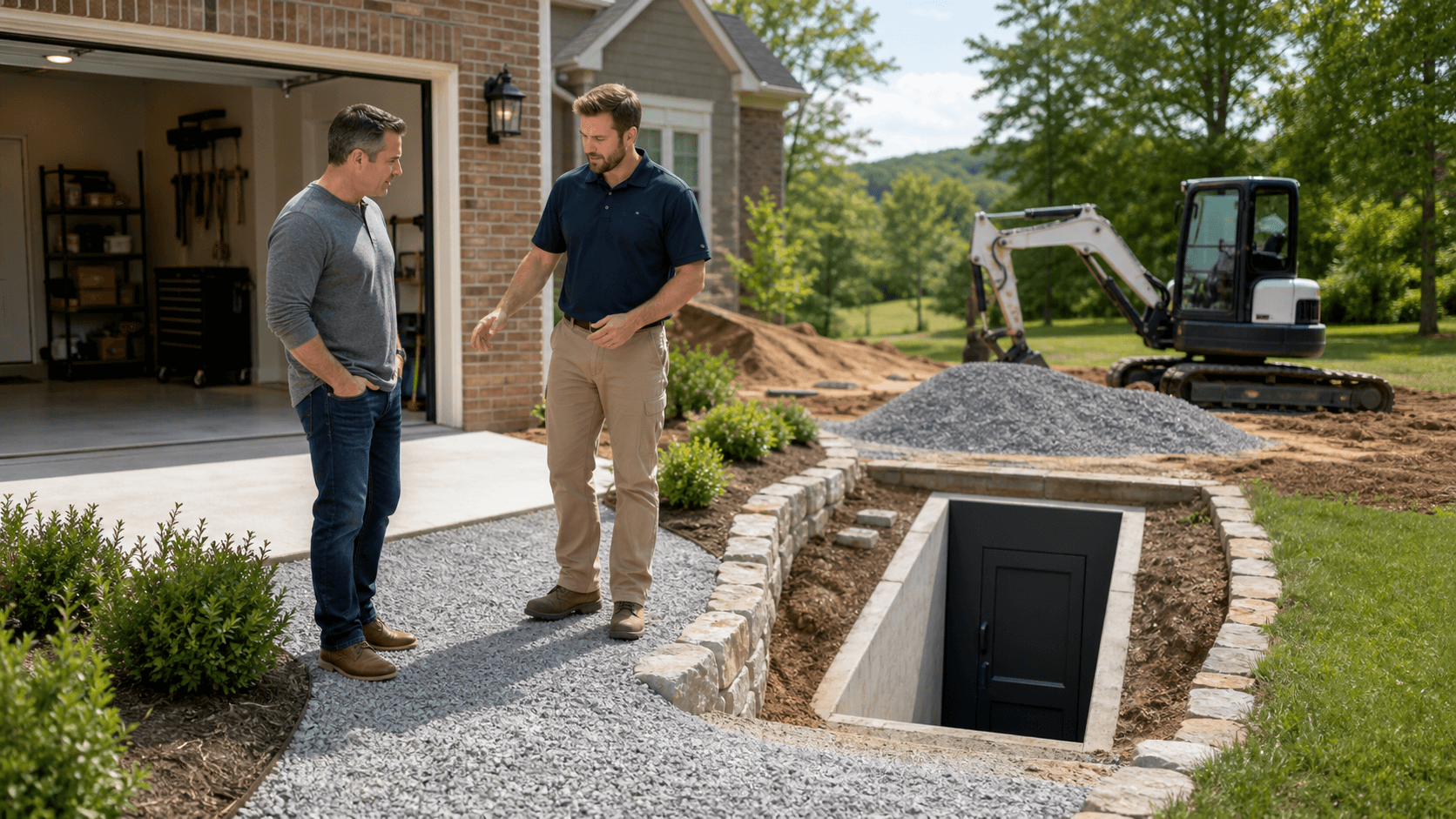
For many Savannah, Tennessee homes with attached garages, an in-garage shelter can provide a direct route without sending the family outside. Staying under one roof avoids crossing a wet driveway or yard during rain, hail, lightning, or debris-producing winds.
Still, the last open corner of a garage is not always the right place. Shelter placement has to work with the way you park, store tools, and move through the space. The entry needs enough room for people to approach, open the shelter door fully, and get inside without climbing over boxes or squeezing between vehicles.
A workable garage layout should account for:
- Vehicle doors and normal parking clearance.
- Access to electrical panels, storage, and walkways.
- Clear space for the shelter door to open.
- The number of people expected to use the shelter.
- A route that remains open when the garage is full.
The installation area also needs the right concrete conditions for the selected unit. We can evaluate the site and discuss FEMA-rated shelter options, along with the excavation or preparation needed for underground and exterior installations. Proper placement should come before convenience, because a shelter must be usable when people are moving quickly.
Plan a Safe Route Across the Yard or Driveway
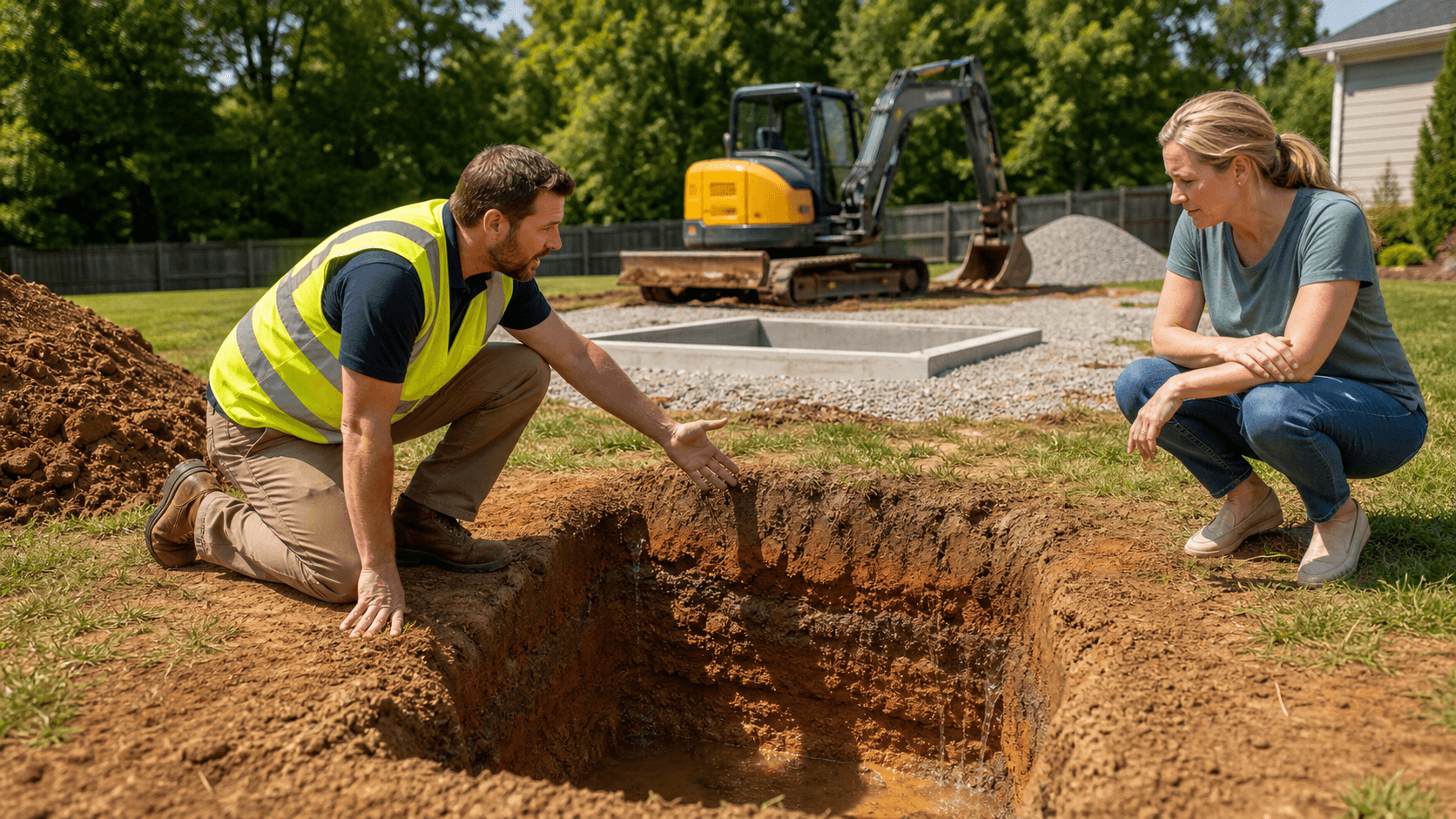
Outdoor shelters need more than a short straight-line path. The shortest route may cross a drainage swale, loose gravel, muddy ground, a slope, or an uneven lawn. Those conditions can slow people down when visibility is limited and weather is already moving in.
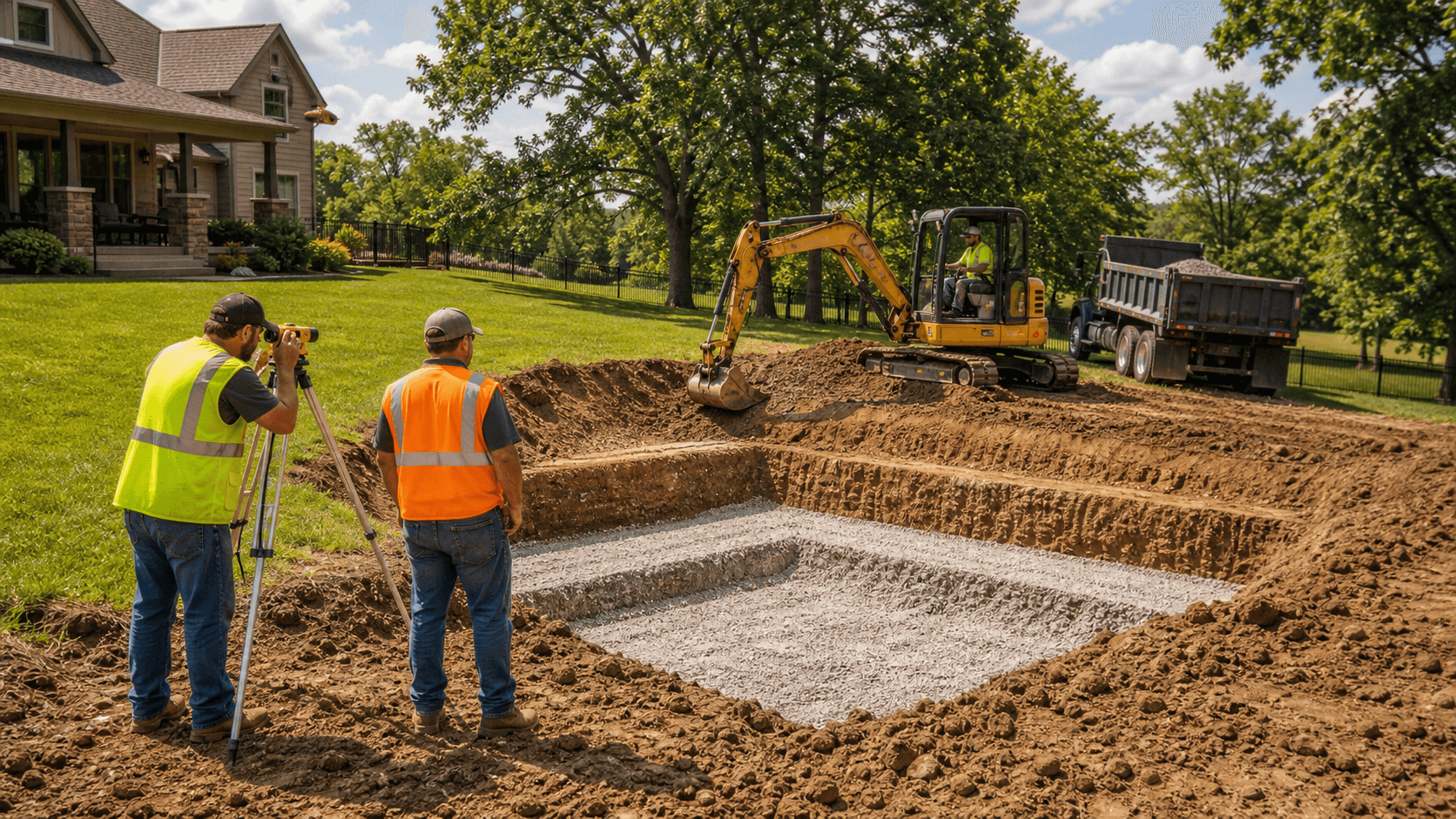
Site work can make a major difference in day-to-day access. Depending on the property, we may recommend grading the approach, placing the shelter near an established driveway, creating a stable walking surface, or improving drainage around the entrance. Precision excavation helps us set the shelter where water is less likely to stand near the door and where erosion is less likely to damage the approach.
This planning matters on rural homes and farm properties where buildings are spread out. For storm shelters, Tennessee farms and larger lots, placement should be based on where people are most likely to be when severe weather develops, whether that is the house, shop, barn, or detached garage. Gravel Express LLC serves Savannah, Hardin County, Adamsville, Pickwick, Clifton, Waynesboro, and the surrounding 50-mile tri-state area across Southwest Tennessee, Northeast Mississippi, and Northwest Alabama.
Prepare for Rain, Darkness, and Power Loss
Fall weather is a good reminder to review shelter access before the next round of severe storms. Strong winds, heavy rain, and tornado threats can occur outside the spring season. We recommend reviewing your route before fall weather arrives and again before spring.
Power loss changes the plan quickly. Garage door openers may not work. Exterior lighting may be out. Electronic locks, gates, and keypad entries can become unreliable. Your household should be able to reach the shelter without depending on an automatic garage door, a powered gate, or a phone flashlight.
Keep the route simple and ready. Store flashlights where they can be reached quickly. Keep a weather radio accessible. Move boxes, tools, bicycles, and loose materials away from garage walkways. If your shelter has an exterior entrance, keep leaves, equipment, and debris clear of the approach.
Review the Site Before Severe Weather Returns
Every property has different grade changes, drainage patterns, parking needs, and daily routines. A site-specific review can help prevent placement problems before installation begins. We provide storm shelter installations, precision excavation, site work, drainage solutions, driveway construction, and hauling, with Licensed & Insured service for homes, farms, and building sites.
The best access plan is one your household can use without stopping to think. Keep the path clear, make sure every person knows which door to use, and choose a shelter location that remains reachable in rain, darkness, and a power outage.
Get A Shelter Plan Built For Your Property
Gravel Express installs storm shelters in Tennessee with precision excavation and FEMA-rated options suited to your home or garage. Our team can review the site, access needs, and installation requirements before work begins. Contact us to request a free estimate, or call 731-607-9558.