Why Some Backyards Need Grading Before an in-Ground Shelter
A proper storm shelter installation starts with the ground around the shelter, not just the shelter itself. A backyard can look level from a distance but still have low spots, soft areas, or slopes that send rainwater toward the planned entrance.
Before excavation begins, we evaluate the site grade, access route, and drainage patterns. Gravel Express LLC serves property owners in Southwest Tennessee, Northeast Mississippi, and Northwest Alabama, helping place FEMA-rated in-ground shelters where they can be reached quickly and where surface water can move away from the entry.
Uneven Ground Can Create Shelter Access Problems
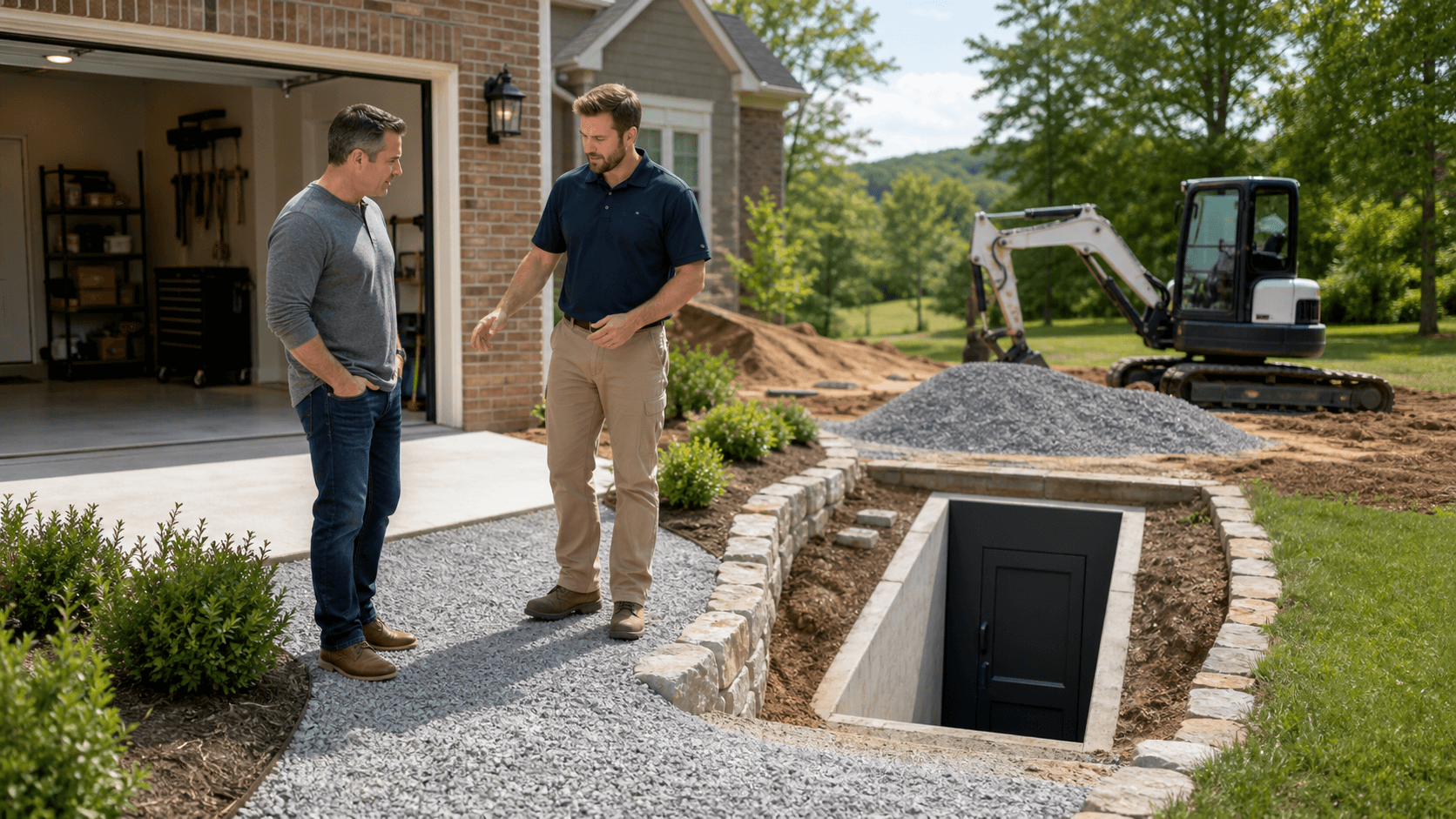
An in-ground shelter needs a clear, stable path to the door. When the ground around the entrance is low or uneven, it can collect mud, leaves, loose gravel, and standing water. That creates a mess during normal weather and can make the shelter harder to reach when severe weather is moving in.
Slopes matter just as much as low spots. If the yard angles toward the shelter door, rainwater will follow that path. A small slope can carry a surprising amount of runoff during a hard thunderstorm, especially when the ground is already wet.
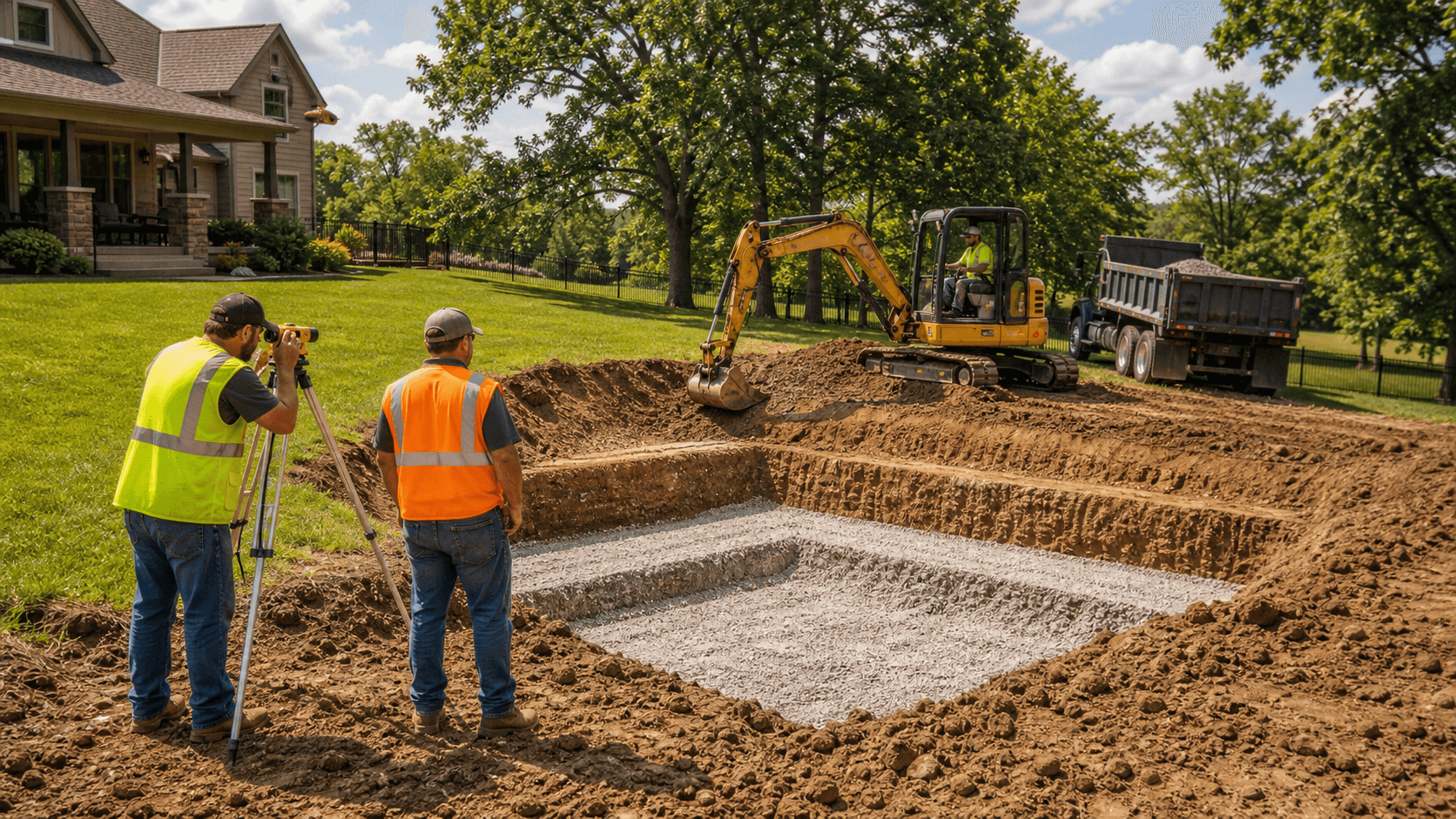
Rough ground can also complicate the work before the shelter is set. Equipment needs safe access. The excavation needs to be at the right depth and elevation. The finished grade must work with the rest of the yard instead of creating a new drainage problem.
During a site review, we look for issues such as:
- A low area near the planned shelter entrance
- A slope that directs water toward the door
- Uneven ground that limits equipment access
- Loose or unstable soil around the excavation area
Precision excavation allows us to prepare the location before the shelter goes in. That preparation helps create a finished area that is easier to walk, easier to maintain, and better suited for drainage.
Runoff Must Move Away From the Shelter Entrance
The finished grade around a storm shelter installation should move water away from the entrance, not toward it. Water needs a path across the property, whether that path leads to a swale, drainage area, ditch, or another suitable outlet.
Rural properties often have runoff sources that are easy to miss until a heavy rain arrives. A nearby house, barn, shop, or detached garage may send roof water toward the shelter location. Downspouts that empty too close to the excavation area can overwhelm the ground around the entrance. Driveways can also carry water downhill into a backyard low spot.
When runoff is a concern, grading may need to work alongside drainage improvements. Depending on the site, we may reshape the ground, form a shallow swale, place gravel in a traffic area, or connect the area to an existing drainage path. The right approach depends on the soil, slope, nearby structures, and how much water reaches that part of the property.
A finished drainage plan should account for more than the shelter itself. It should also consider where water comes from and where it will go after the ground is reshaped.
Soft Soil and Low Spots Need Attention Before Excavation
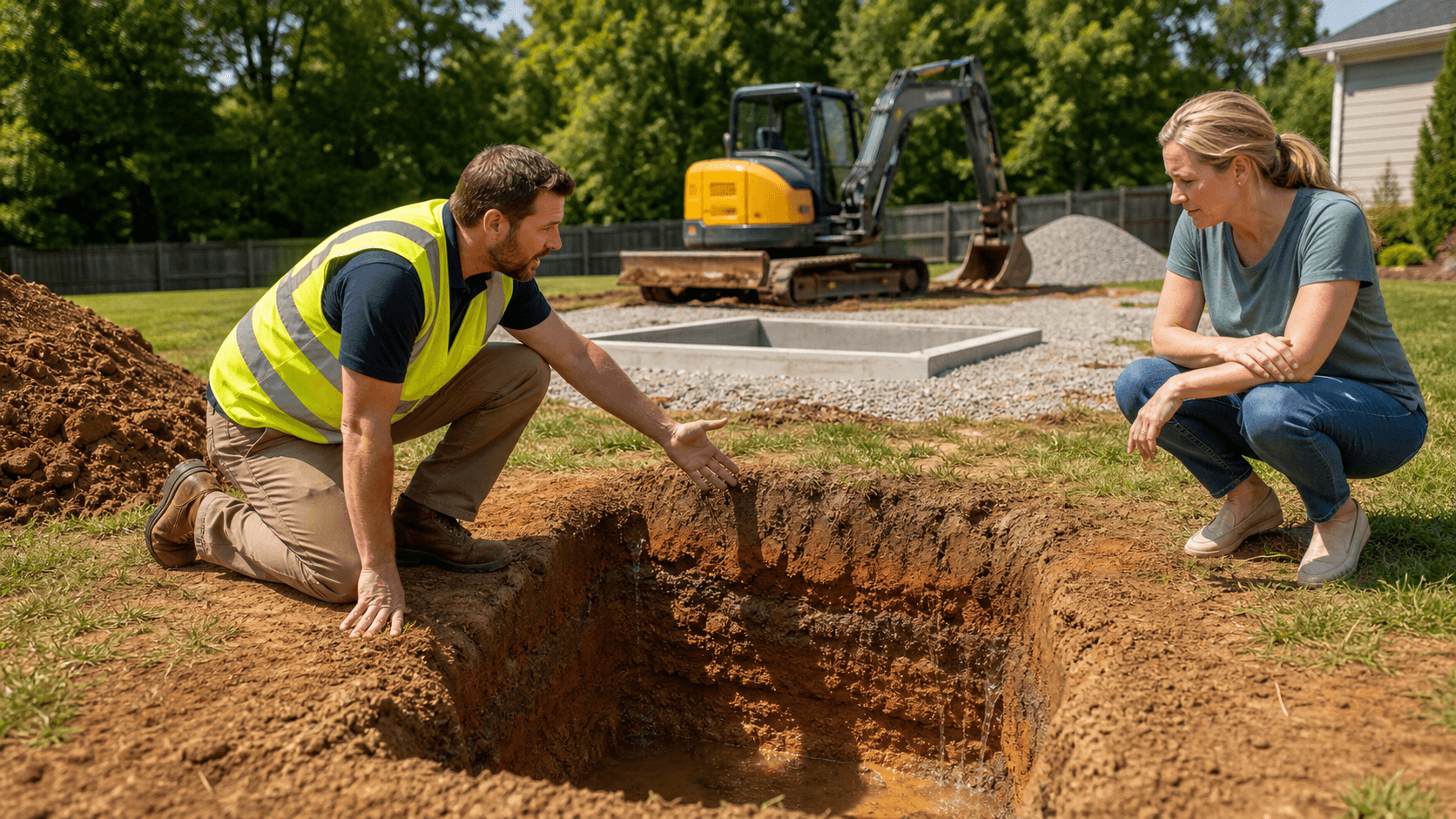
Standing water is often a warning sign that the ground needs attention. If a backyard stays wet long after rain, the problem may be compacted soil, poor drainage, a hidden low area, or runoff coming from a higher part of the property.
Soft or saturated soil can make excavation more difficult. The area around an in-ground shelter needs a firm, prepared base and a stable finished surface. When the ground is too wet or poorly shaped, additional site preparation may be needed before the storm shelter installation can be completed correctly.
We also plan for what the yard will look like after the work is done. Once the shelter is installed, the surrounding soil must be shaped to settle properly and drain as intended. This matters on home sites, farms, and new construction properties where equipment traffic may have packed down the ground or changed the way water moves.
Common signs that grading may be needed include:
- Water standing in the same area after rain
- Tire ruts or soft spots that remain wet
- Mud collecting near the planned entrance
- Runoff flowing from higher ground toward the site
- A yard that drains poorly near buildings or driveways
Addressing those conditions before digging helps avoid trying to correct water problems after the shelter is already in place.
Grading Should Be Planned with the Shelter Location
The lowest spot in the yard is not automatically the best place for an in-ground shelter. Convenience matters, but the final location also needs to account for drainage, slope, underground utilities, access, and safe spacing from nearby structures.
Before work starts, we review how water moves across the property during rain. We also consider where excavation equipment can enter and where the finished grade will tie back into the rest of the yard. Driveways, fences, septic areas, utility lines, outbuildings, and existing drainage routes can all affect the best placement.
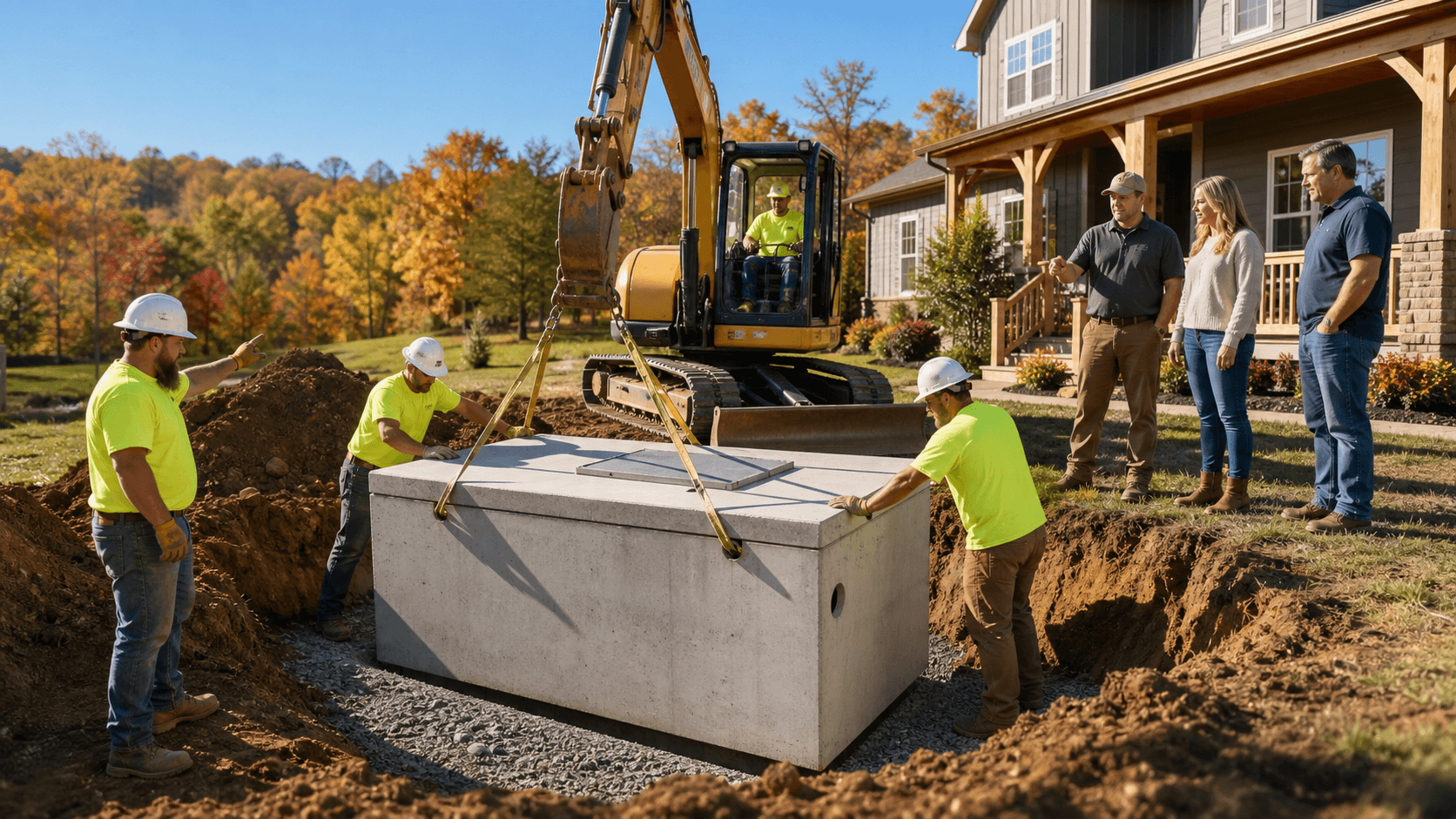
A storm shelter installation is easier to manage when grading is part of the early plan. Moving the shelter location slightly, adjusting the entrance elevation, or shaping the surrounding ground can prevent water from being directed toward the door later.
Proper grading also supports a cleaner finished appearance. The shelter should fit the property, not look like it was placed in a hole that collects every nearby runoff path.
Prepare Your Property Before Fall Storms Arrive
September is a good time to watch what happens in your backyard after a hard rain. Pay attention to where water stands, where mud collects, and which direction runoff travels. Those details can reveal problems that are not obvious on a dry day.
Uneven grade, soft soil, low spots, and water flowing toward a planned shelter entrance should be addressed before excavation begins. A well-prepared site supports safer access, better drainage, and a shelter area that continues to work as intended through changing weather.
Get a Shelter Plan Built for Your Property
Gravel Express provides precision excavation and storm shelter installation for property owners who need a dependable below-ground shelter plan. Our team can assess the work needed and prepare the site for safe, practical access. For a free estimate, contact us or call 731-607-9558.